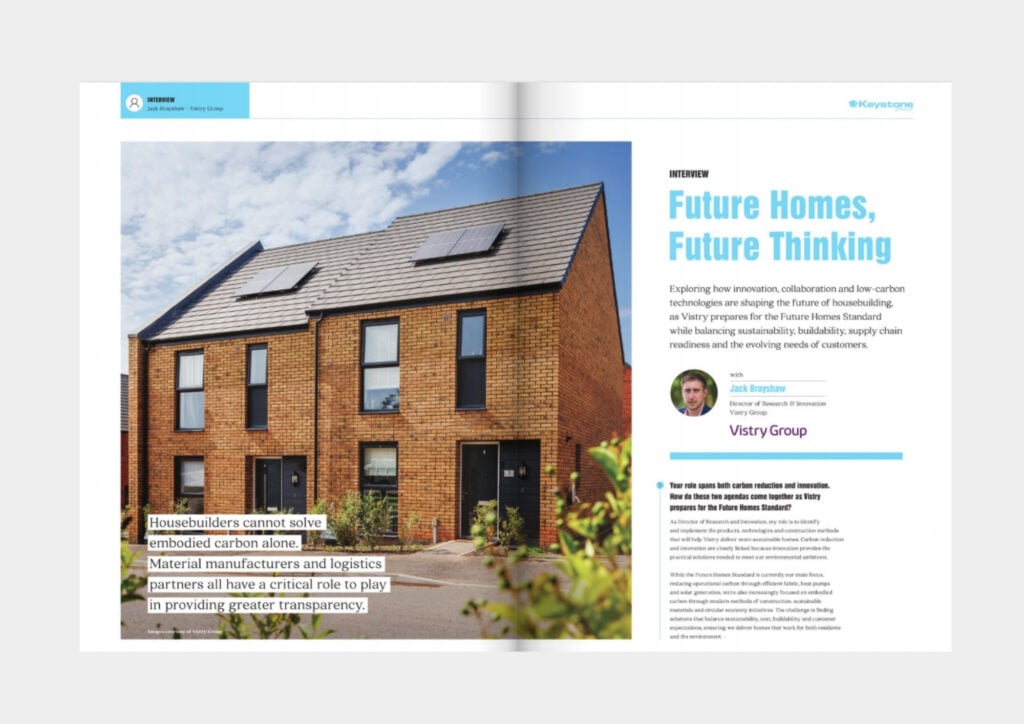
Hi-therm+ and the Changing Demands on Fabric Performance
As the Future Homes Standard brings another step change in the performance expected from new housing, familiar specification decisions are taking on greater significance. For housebuilders, improving the building fabric and addressing heat loss at critical junctions will be fundamental to delivering better-performing homes.
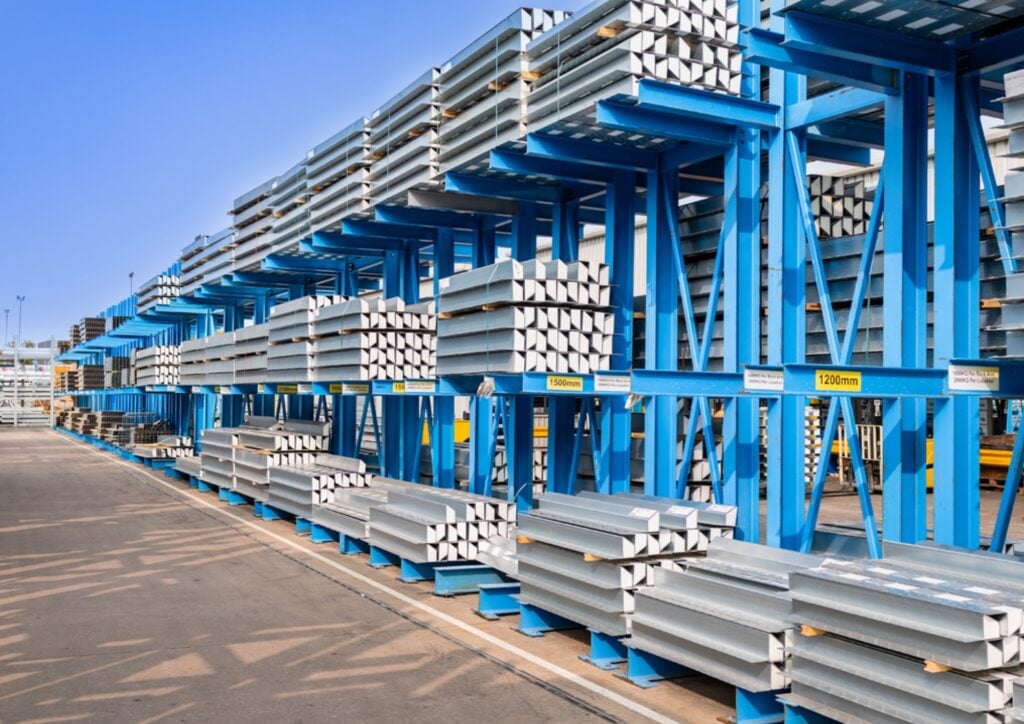
A fabric-first approach is based on reducing heat loss through the building envelope before relying on building services or renewable technologies to compensate for poorer performance. Insulation and airtightness are central to that, but so too are the junctions between different elements of the fabric.
As the performance of walls, floors and roofs improves, the impact of heat loss at those junctions becomes increasingly significant.
The detail matters
Openings for windows and doors are a particular consideration. Steel is highly conductive, which means conventional steel lintels can create a significant thermal bridge through an otherwise well-insulated wall.
The effect is measured through linear thermal transmittance, or Psi values, and forms part of the calculation of heat loss through thermal bridging.
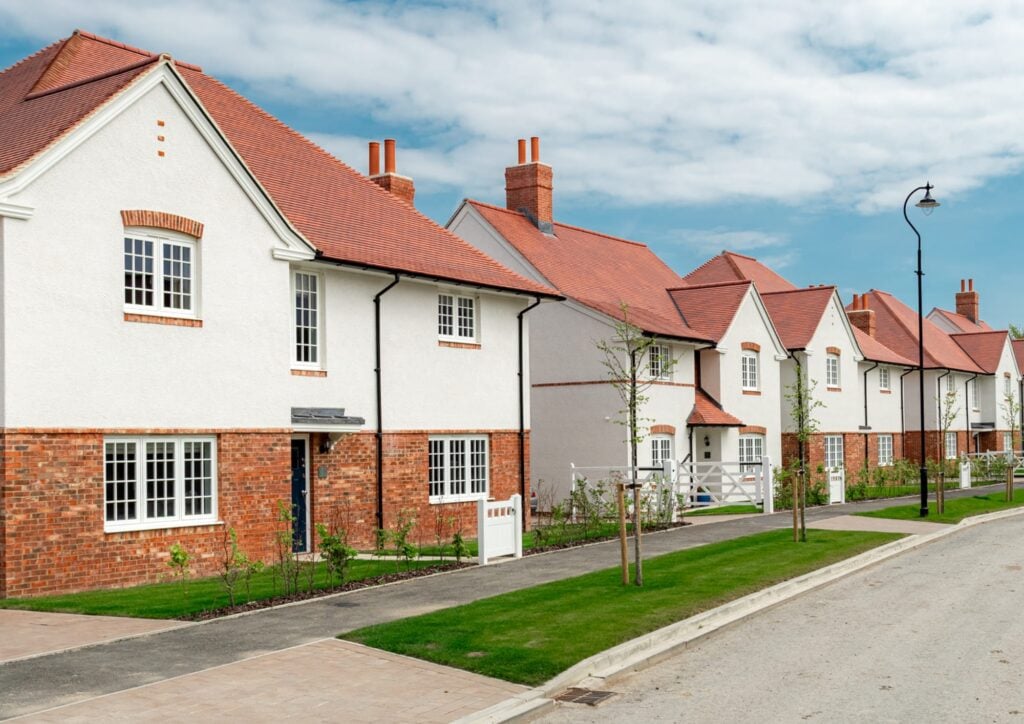
For housebuilders working across repeated house types, seemingly small changes at individual junctions can therefore have an impact when considered across the complete dwelling and, ultimately, across an entire development.
This is where established specification choices such as Hi-Therm+ become increasingly relevant.
The direction of travel for new housing is now clear.
Published in March 2026, the Future Homes and Buildings Standards introduce higher expectations for energy efficiency and low-carbon heating, with the new requirements coming into force in England from March 2027, subject to transitional arrangements.
For housebuilders, meeting those requirements will involve new technologies, but it will also place renewed importance on something much more fundamental: getting the building fabric right.
That combination is particularly relevant to the fabric-first conversation. Improving thermal performance does not necessarily mean introducing greater complexity to a familiar masonry build.
Product development has continued too. Enhanced pre-fitted insulation has improved Hi-Therm+’s thermal performance by up to 30%, with the potential to improve overall junction Psi values by up to 15%, strengthening its contribution to a fabric-first specification.
Hi-Therm+ is already used across housebuilding projects as a thermally efficient alternative to conventional steel cavity wall lintels. Its significance in the context of Future Homes is not that the product itself is new, but that the performance issue it addresses is becoming more important.
The lintel uses separate galvanised steel inner and outer elements connected by a rigid polymer thermal insulator, creating an effective thermal break through the component. Together with pre-fitted insulation, the design achieves Psi values typically between 0.03 and 0.06 W/mK, depending on the wall construction, and is up to five times more thermally efficient than a standard steel lintel.
Fabric performance without greater complexity
For volume housebuilding, thermal performance cannot be considered independently of buildability.
Improving a junction on paper only delivers the intended benefit if the detail can be constructed consistently across site. That relationship between designed and as-built performance has become increasingly important under Part L, with greater emphasis on evidencing that specified materials and construction details have actually been used.
Previous technical work has highlighted the risk that substitution, workmanship or changes to detailing can create a gap between the performance modelled at design stage and the completed dwelling.
Hi-Therm+ retains a one-piece top-hat construction, providing a familiar installation method while incorporating the thermal break within the lintel itself. The single component also provides stability between the inner and outer leaves during construction, avoiding some of the additional components and installation requirements associated with split lintel solutions.
Getting more from the fabric
The Future Homes Standard will inevitably increase focus on technologies such as low-carbon heating and on-site renewable electricity generation. The new regulations themselves introduce a requirement for on-site renewable electricity generation in new dwellings.
But those technologies do not diminish the importance of the building envelope. If anything, higher performance expectations make it more important to minimise avoidable heat loss before considering how that loss will be offset elsewhere.
For volume housebuilding, thermal performance cannot be considered independently of buildability.
For housebuilders already using Hi-Therm+, a change of direction is not required – the standard reinforces the value of a specification decision many have already made.
As the industry moves towards the Future Homes Standard, innovation will not only be about introducing entirely new methods or technologies. It will also be about continuing to improve proven solutions, understanding their contribution to whole-house performance and ensuring that every part of the fabric works harder.
For lintels, a component that can easily be overlooked within the wider energy strategy, their contribution is becoming increasingly difficult to ignore.