Putting Safety First: How Keystone Is Building a Stronger Safety Culture
At Keystone, health and safety isn’t simply a requirement, it’s part of the way we work every day.
From the moment the working day begins to the point when the team heads home, safety remains front of mind. Stuart Black, Operations Manager joined two years ago and over the past two years, Keystone has continued to strengthen its approach, placing an even greater emphasis on hazard awareness, employee engagement and creating a safer working environment across the business.
Safety Starts with the Conversation
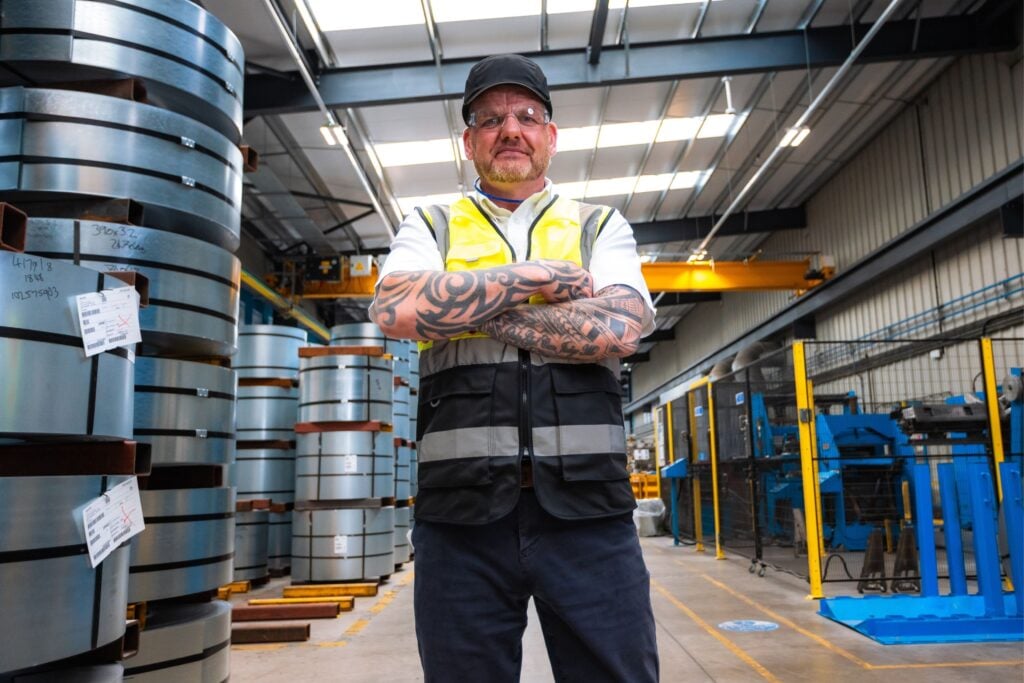
Stuart Black, Operations Manager, discusses his journey of significantly improving health and safety at his time with Keystone Lintels so far.
“When I joined Keystone two years ago, there has always been a strong focus on health and safety. It’s the first thing we talk about at the start of the day, and the last thing we talk about before we leave.”
That consistency is important. By making health and safety part of the daily conversation, it becomes embedded into the culture rather than something considered only when an incident occurs.
A key area of focus has been hazard perception and reporting. Keystone has introduced a QR code reporting system, making it easier than ever for employees to flag potential hazards as they see them.
Empowering Employees to Report Hazards
The QR code system allows anyone across the business to quickly report a hazard.
Employees can simply scan the QR code, take a photograph of what they have identified and submit the information. The team can then see the hazard in real time and take appropriate action.
This approach has helped make safety more immediate, accessible and collaborative.
“It’s engaging with the employees which is the key bit.”
And the results demonstrate the impact of that engagement. Hazard reporting increased by 20% between 2023 and 2024, while accidents reduced by approximately 20% over the same period.
Rather than simply measuring incidents, the focus is on encouraging employees to identify potential problems before they become accidents.
500 Days Without a Lost Time Accident
One of the biggest milestones achieved was reaching 500 days without a lost time accident.
“We’ve hit a milestone that we’re all super proud of last year, 500 days without a lost time accident. Any manufacturing company in the country would be really proud of that.”
It’s an achievement that reflects the collective effort of the Keystone team and the importance placed on safety throughout the business.
But reaching a milestone like this isn’t about becoming complacent. It’s about continuing to identify opportunities to make the workplace safer.
Making Practical Changes on the Factory Floor
One example of this approach can be seen in the welding bays.
The weld bays were located at the furthest point from the existing exit. This increased the amount of forklift activity in the area and created an opportunity to improve the layout and reduce potential risks.
Keystone responded by moving the weld bays and introducing overhead cranes, significantly reducing the need for manual handling.
It’s an example of how listening to employees, understanding the risks and making practical changes can have a real impact on workplace safety.
Safety Over Speed
For Keystone, the message is straightforward: productivity should never come at the expense of safety.
As the team puts it:
“It doesn’t matter if it’s 10% slower, if it’s 100% safer.”
That philosophy captures the approach perfectly.
By encouraging employees to speak up, making hazard reporting simple, investing in safer equipment and continually reviewing how work is carried out, Keystone is building a safety culture where everyone has a role to play.
Because ultimately, getting the job done safely is more important than getting it done quickly.